Generative visualizer
A Python rendering system driven by track metadata, lyrics, palettes, scene logic, glitch intensity, and audio-specific configuration.
A long-running music practice that grew into release infrastructure, visual systems, software, and interactive media, culminating in PRESS ANY KEY TO RESTART SIMULATION.
The musical practice that would later feed Astraltunes and VRSM was already active through production, engineering, aliases, and independent release work.
Astraltunes emerged in a primitive form as a publishing and release channel around PALSHU and related music work, years before VRSM Labs was formally established.
VRSM Labs became the broader studio structure, consolidating long-running audio, visual, software, and systems practices under one identity.
Work begins on PRESS ANY KEY TO RESTART SIMULATION, developing its music, narrative, visual language, production workflow, and supporting tools over an extended creative cycle.
The completed y45u album brings that lineage together through music production, narrative, visual systems, custom tooling, cloud infrastructure, documentation, and interactive media.
The record follows a recursive narrative built around memory, control, false choice, identity, compliance, rebellion, and reset logic. Code, save states, servers, grids, rendering, loops, logs, and system commands function as emotional metaphors for alienation, agency, repetition, and the desire to escape inherited structures.
That language continues beyond the lyrics. Track metadata informs color, motion, scene selection, and glitch intensity, while the public y45u interface extends the same game and system vocabulary into the project's interactive identity.
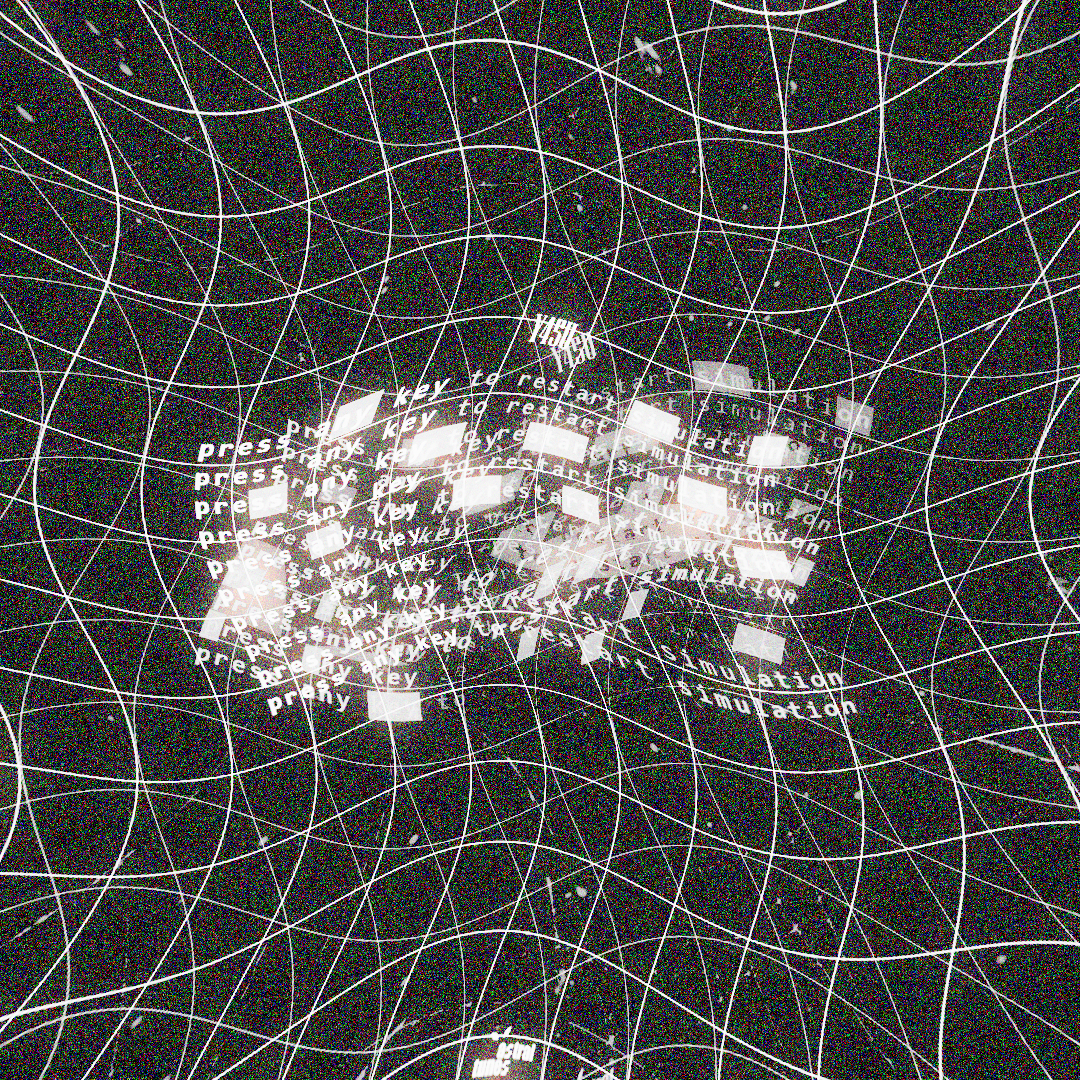
The artwork and visual material were developed through a mixed workflow combining custom Python-based internal tools with established graphics software.
Procedural variation was used where it served the project, while authored composition remained central. The result is a consistent visual grammar across cover art, social assets, loops, visualizers, and the public y45u interface.
A Python rendering system driven by track metadata, lyrics, palettes, scene logic, glitch intensity, and audio-specific configuration.
A custom signal-processing visual system simulating chroma separation, tracking drift, sync failure, phosphor persistence, interlacing, dropouts, grain, and tape-like audio behavior.
Custom Python-based internal tools were used alongside established graphics software to generate, transform, and iterate visual material while keeping the album's visual language coherent.
Scripts synchronize metadata, create snippet variants, generate documents, package media, upload assets, and maintain repeatable release operations.
Cloudflare R2 hosts public audio and media assets, while VRSM-controlled domains provide stable branded routes for the artist site, snippets, documents, and release materials.
The project maintains structured album metadata, track identifiers, lyrics, narrative arcs, press materials, technical notes, and a versioned release overview.
An internal Astraltunes playlist-intelligence and curator-management web app using the Spotify API for playlist discovery, enrichment, contact extraction, campaign grouping, lead management, and track-specific pitching.
The supporting tooling was more extensive than the final marketing execution around the release. The case study documents what was built without treating every experiment as a central production component or overstating the campaign outcome.
Astraltunes and y45u show the working method that later became formalized through VRSM Labs: music at the center, with design, software, infrastructure, and interactive systems built around the needs of the work.